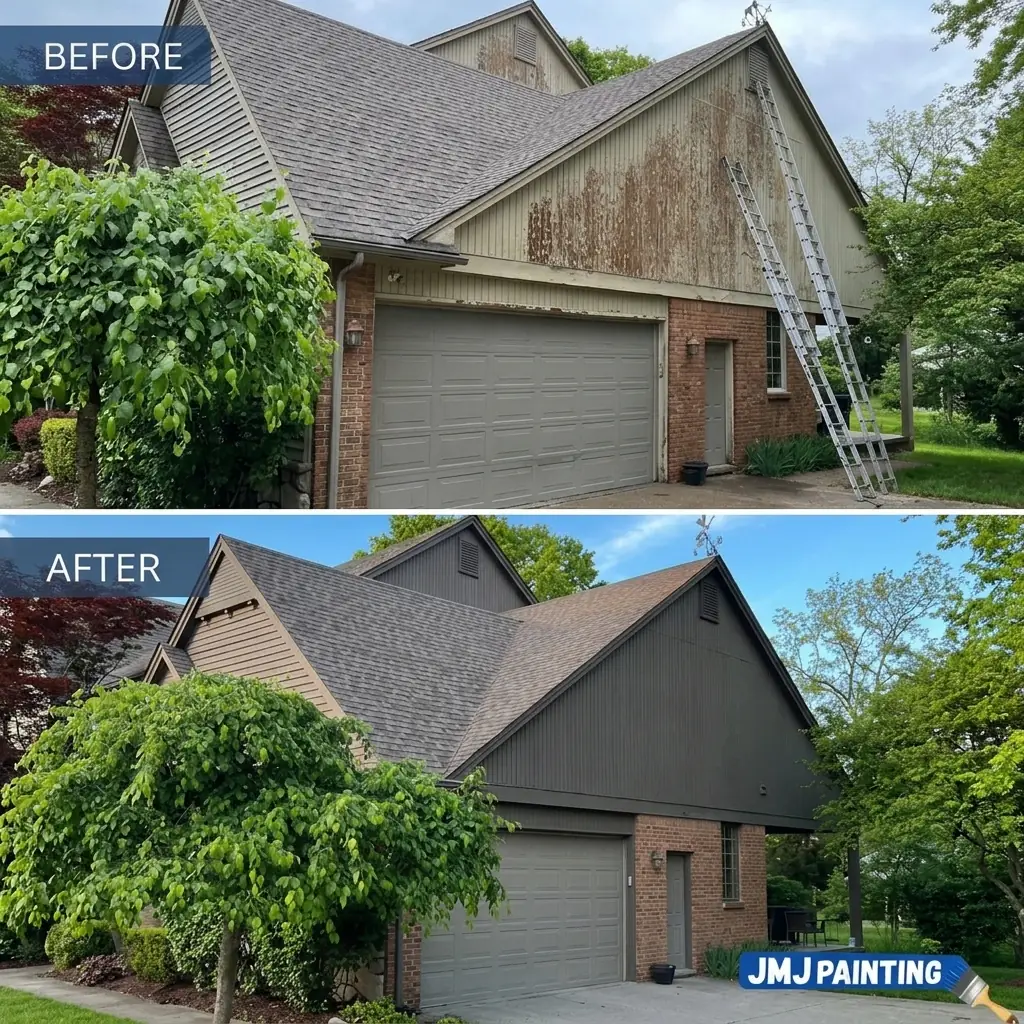
When a homeowner shows us peeling paint, the first question is usually whether the last painter used cheap paint. Sometimes, but rarely. Peeling is almost always a bonding problem: something came between the new coating and the surface, or the surface was never ready to hold paint in the first place.
Moisture getting behind the paint
On exteriors, water is the most common cause. It gets in through open caulk joints at windows and corner boards, through bare end grain on trim, or from inside the house, and it pushes paint off from behind. Michigan's freeze-thaw cycles make it worse by opening those gaps a little more every winter. Sherwin-Williams lists moisture as a leading cause of exterior peeling in its guide to fixing exterior paint peeling.
That's why recaulking window perimeters, corner boards and trim joints is part of every exterior we paint. It's not glamorous, but it's where most failures start.
Painting over dirt, chalk and mildew
Paint sticks to whatever is on the surface. If that's dirt, mildew or the chalky film old paint and aluminum siding develop over time, the new coat is bonded to something that will wash or flake away. Every JMJ exterior starts with a pressure wash at a minimum of 2,000 PSI for exactly this reason.
Glossy surfaces that weren't sanded
New paint has trouble gripping slick, glossy surfaces, like old oil-based trim, cabinets and previously enameled doors. Without sanding or deglossing, paint can look perfect for months and then peel off in sheets the first time something bumps it. Cabinets are the classic example, which is why our cabinet process includes degreasing, sanding and a bonding primer.
Skipping or using the wrong primer
Primer isn't just a first coat of paint. Different primers are designed for different jobs: bonding to slick surfaces, sealing bare wood, blocking stains from bleeding through, or preparing aluminum or masonry. Bare spots, repairs and problem surfaces need the right one before finish paint goes on.
Painting in the wrong conditions
Every exterior paint has temperature and moisture requirements for application and curing, listed by the manufacturer. Paint applied to damp siding, in direct heat, or right before a cold night may not cure properly. We schedule exterior work around the forecast and the product's requirements.
What a prep-first job looks like
- Wash the surface thoroughly.
- Scrape and sand failing paint, feathering the edges.
- Repair rotted wood and damaged drywall.
- Recaulk joints where water can get in.
- Prime bare and repaired areas with the right primer for the surface.
- Apply finish coats in the right conditions.
It takes longer than rolling paint over what's there. It's also the difference between a paint job you redo in two years and one that lasts.
Seeing peeling paint? Get a free estimate
Frequently asked questions
What causes exterior paint to peel?
Usually moisture getting behind the paint, paint applied over dirt, chalk or mildew, glossy surfaces that weren't sanded, or bare wood that was never primed.
Can you paint over peeling paint?
Not without prep. Loose paint has to be scraped and sanded, edges feathered, and bare spots primed first, or the new coat fails along with the old one.
How do you stop paint from peeling again?
Fix the cause: wash the surface, scrape and sand, repair rotted wood, recaulk joints where water gets in, prime bare areas and apply the finish in the right conditions.